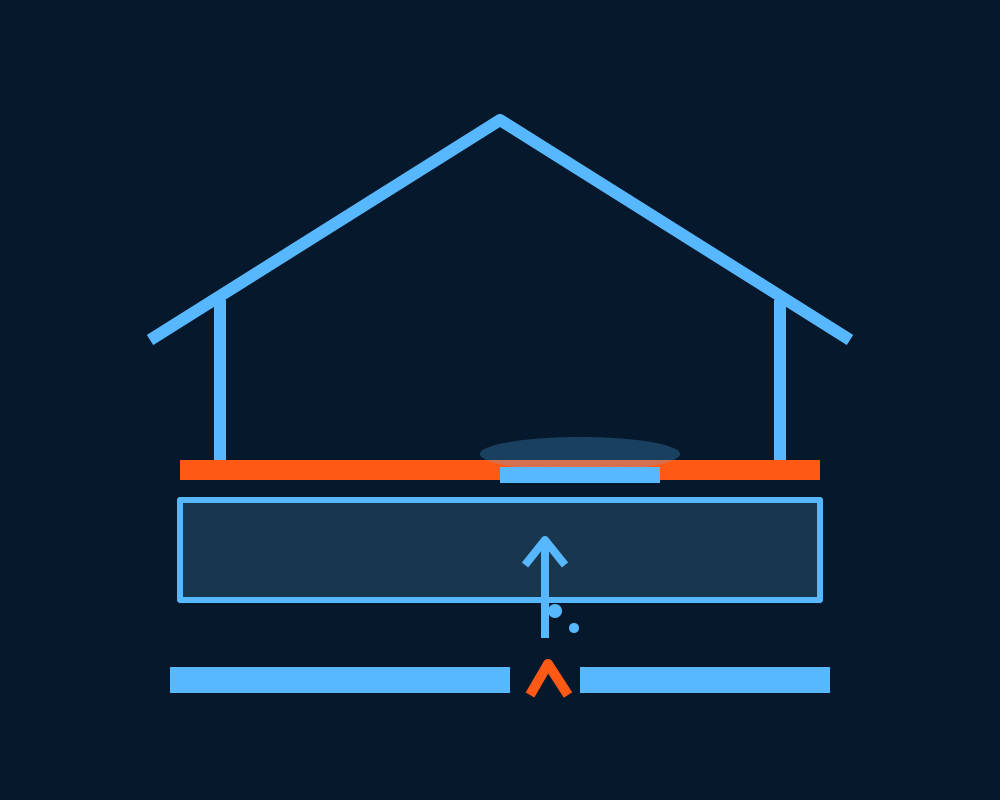
A slab leak is a plumbing leak in or beneath a home's concrete slab foundation. Warning signs can include unexplained damp flooring, a warm floor patch, the sound of running water when fixtures are off, or an unexpected rise in water use. A plumber or leak detection specialist finds the source and arranges pipe repairs, while 24 Hr FloodMasters handles the resulting water damage.
If water is reaching rooms, walls, or flooring, contact us for emergency water mitigation. We assess moisture, remove water where needed, dry suitable materials, and document the loss. We do not repair pipes, concrete slabs, or foundations.
Call (254) 482-1151What are the signs of a slab leak?
Look for a pattern rather than one clue. A warm patch can have other causes, and a high water bill does not locate a leak. New or recurring changes deserve a plumber's attention, especially when several appear together:
- Damp carpet or moisture returning along a floor seam.
- Wood flooring that cups, lifts, or changes shape.
- Swollen baseboards or damp lower walls.
- An unexplained warm area on the floor.
- Running-water sounds when no fixtures are being used.
- Water use that rises without a change in household activity.
Record where and when you notice changes. Do not drill into the floor or pull materials apart to find the source. Other leaks can create similar symptoms. San Antonio Water System identifies moisture and stains around slabs, walls, and floors as possible leak clues, not proof of a specific pipe failure.
How does slab leak water spread under flooring?
Water escaping below a slab does not always enter the house directly above the damaged pipe. Depending on the building and water path, moisture may reach the interior through joints, openings, or cracks, then move between concrete and the finished flooring.
Floor coverings can hide that movement. Water may reach underlayment, adhesive, cabinet bases, or wall edges before a puddle appears. The visible wet spot does not show the full extent or identify the pipe's location.
Our guide to signs of water damage under floors explains changes worth reporting. Moisture checks help define affected materials while a plumbing specialist investigates the source. Those are separate assessments with different purposes.

Why does the Central Texas setting matter?
Slab-on-grade foundations are common in Central Texas homes, putting finished flooring close to the concrete beneath it. That makes concealed moisture below the floor covering an important part of a water damage assessment.
Expansive clay soils in the region can swell and shrink as moisture conditions change. These soils are commonly associated with foundation movement, a relationship described by the University of Texas Bureau of Economic Geology. That does not mean a crack proves a slab leak, or that every leak was caused by soil movement. Structural concerns need evaluation by the appropriate foundation or engineering professional.
Can flooring be saved after a slab leak?
Sometimes, but no one can promise that from a photograph or the size of a puddle. The flooring type, how long materials stayed wet, the water's condition, and access for drying all affect the decision.
A surface can feel dry while moisture remains underneath. The EPA's water damage guidance includes checking and drying underflooring, not just the exposed finish. Our structural drying services use moisture checks and controlled drying for materials that can be safely retained.
Some swollen, separated, contaminated, or inaccessible materials may need removal during mitigation. Replacement flooring, finish work, and permanent repairs are handled by the appropriate contractor afterward. Do not install new flooring or cover the wet area before the source and moisture condition are addressed.
Who do I call first, a plumber or a water mitigation company?
If you suspect a hidden leak without visible water damage, start with a plumber or leak detection specialist. They determine whether plumbing is leaking and locate the source. Ask who will perform any necessary pipe repairs.
If water is actively entering rooms or building materials are wet, contact both the plumbing professional and FloodMasters promptly. You do not need to wait for visible damage to spread before arranging a moisture assessment. Source control and mitigation may need coordination.
Tell each professional what you observed and what the other is handling. Drying cannot resolve an active pipe leak, and repairing a pipe does not establish that surrounding flooring and walls are dry.
What should I do while waiting for help?
Stay out of standing water near electrical equipment, outlets, or cords. Keep people away from lifted flooring and other trip hazards. Move dry belongings only when it is safe, and do not plug household equipment into a wet area.
Take wide room photos, close photos of visible damage, and notes about discovery time and affected rooms. Keep water bills and service records that may help explain the timeline. Businesses and property managers should notify the responsible maintenance contact. Our claims documentation support helps organize mitigation records; coverage decisions remain with your carrier.

When should I call a professional?
Call promptly for recurring dampness, spreading water, flooring changes, or a suspected hidden plumbing leak. Electrical hazards or unstable materials require immediate attention from the appropriate professional. Do not cut concrete or attempt pipe or foundation repairs yourself.
FloodMasters helps homeowners, businesses, and property managers with extraction, moisture checks, controlled drying, and documentation. For local support, see our Temple water damage mitigation service. We handle the water-affected property while the appropriate specialist handles the leak and any structural concerns.
Call (254) 482-1151What else should I know about slab leak water damage?
Does a warm floor always mean a slab leak?
No. A warm patch can have other causes. Report it along with any dampness, running-water sounds, or unexplained water use so a plumber can investigate. Temperature alone does not confirm a leak.
Can water remain under flooring after the pipe is repaired?
Yes. Repairing the source stops that leak, but it does not remove water already held in floor layers or nearby materials. Moisture checks help determine whether extraction or controlled drying is still needed.
Does FloodMasters locate or repair slab leaks?
No. A plumber or leak detection specialist investigates the plumbing and arranges the source repair. FloodMasters handles resulting interior water damage through extraction, moisture assessment, drying suitable materials, and documentation. We do not repair slabs, pipes, or foundations.